
NEWS & EVENTS
-
HOME > NEWS > Industry News
Translate the Chinese in the code to English: New tea drinks going global, consumers "opening blind boxes"
2026-01-26
Bidding Farewell to "Purely Chinese Style", Intensifying the Focus on Localization.
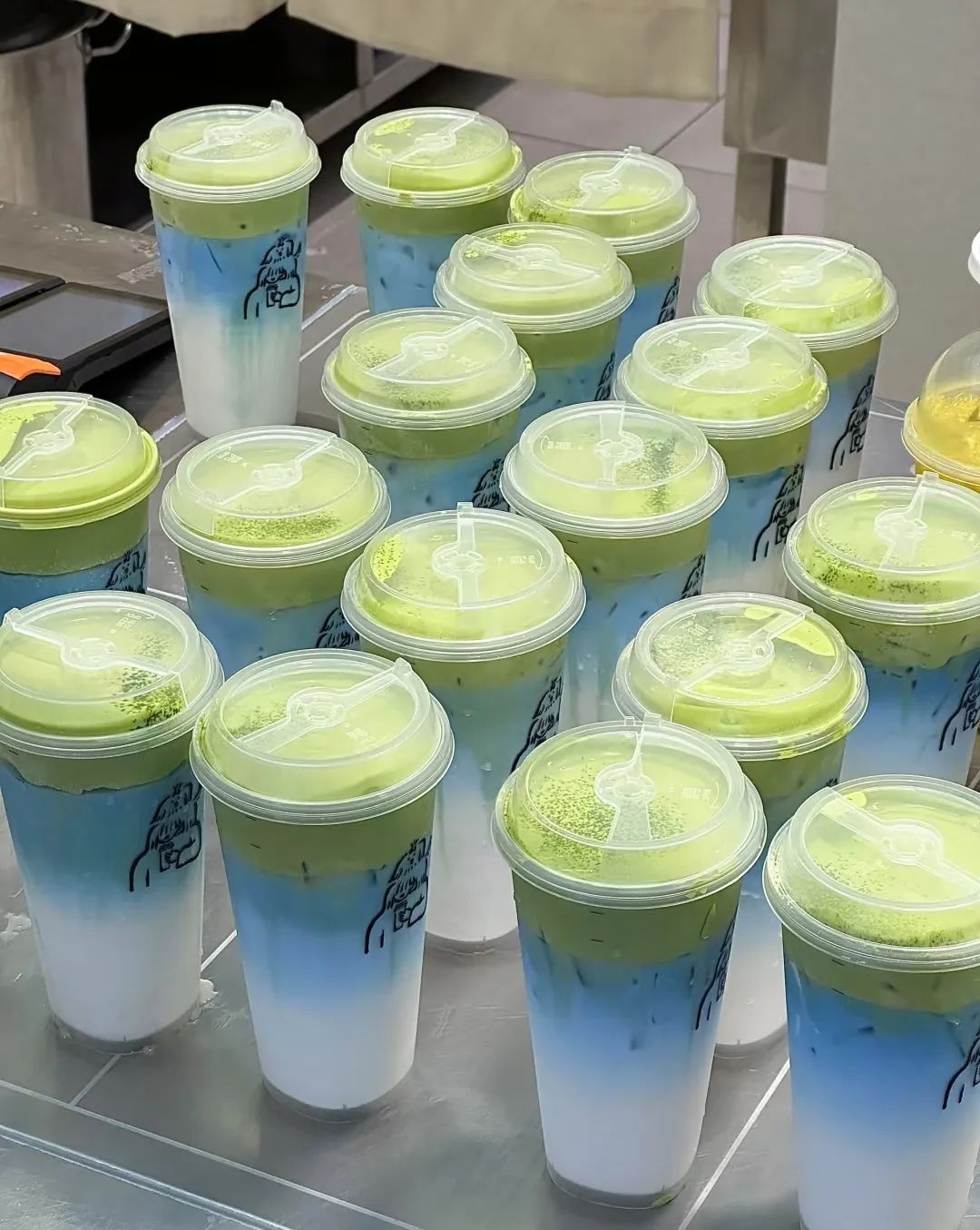
In early autumn, when Heytea (喜茶) launched a mysterious blue drink at its US stores, the instantly long queues sparked a social media frenzy—this was no sci-fi beverage, but "Matcha Cloud Coconut Blue," a blend of blue spirulina, coconut water, and matcha. Combining health attributes with visual appeal, the product sold out upon launch in the UK, US, and Canada.
Heytea's "Matcha Cloud Coconut Blue"
Image source: Xiaohongshu @pipapo
A Heytea representative told Xiaguang Club (霞光社) that, as of now, Matcha Cloud Coconut Blue has sold over 700,000 cups cumulatively in overseas markets.
Behind this blue drink lies a collective shift in mindset for new-style tea brands expanding overseas. In August this year, Heytea's overseas store count exceeded 100, Tianlala (甜啦啦) opened three stores simultaneously in Bali, and Chabaidao (茶百道) announced its arrival in New York. Alongside new store openings overseas, these brands are no longer simply copying their domestic menus. Instead, they are turning their stores into "regional blind box machines," sourcing the most popular and distinctive local ingredients to incorporate into their menus upon entering each new market. Consumers, in the act of "opening the blind box," simultaneously taste local flavors and Eastern tea notes.
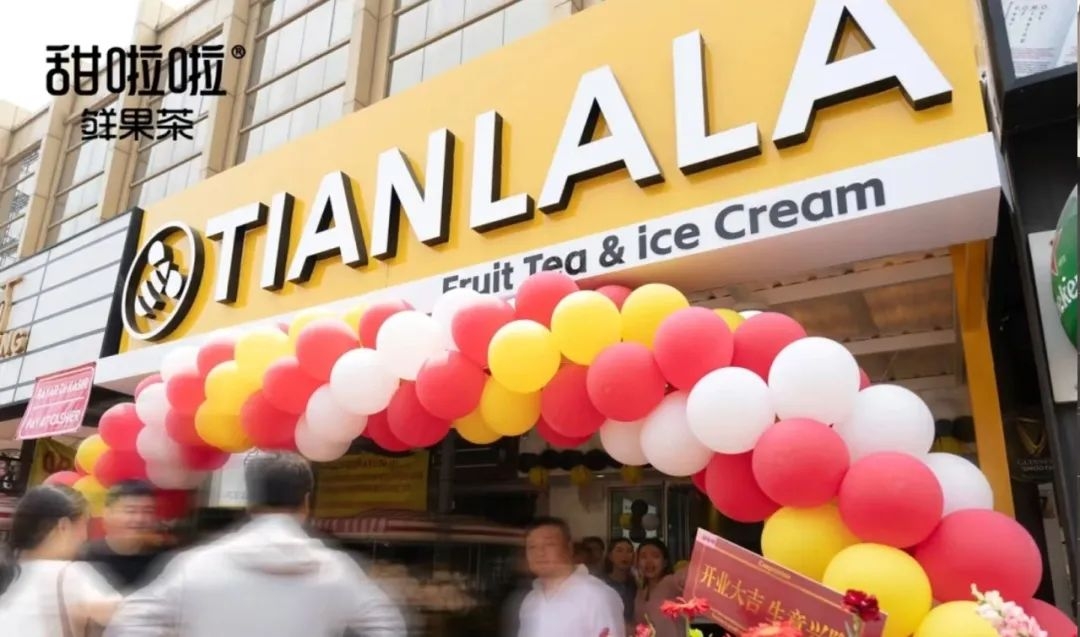
Image source: Xiaohongshu @Tianlala
On the other hand, in the 3.0 era of new-style tea brands going global, whoever first "ignites" social buzz holds the key to "explosive orders." Whether this "ignition" comes from taste, appearance, collaborations, or the long lines outside the doors...

"Explosive Orders" are the Instant Realization of "Social Currency"
In July this year, a casual photo of BLACKPINK member Lisa in a sports car unexpectedly sparked a global "matcha" consumption frenzy—the emerald green in the cup holder was precisely Heytea's "Triple Supreme Matcha Latte."
Within 48 hours of the photo's release, long queues formed at Heytea's overseas stores from New York to Sydney, with many stores in the US, Australia, and elsewhere quickly selling out. It is understood that the "Triple Supreme Matcha Latte" is a product already validated in the domestic market and had only recently been launched in multiple overseas countries.
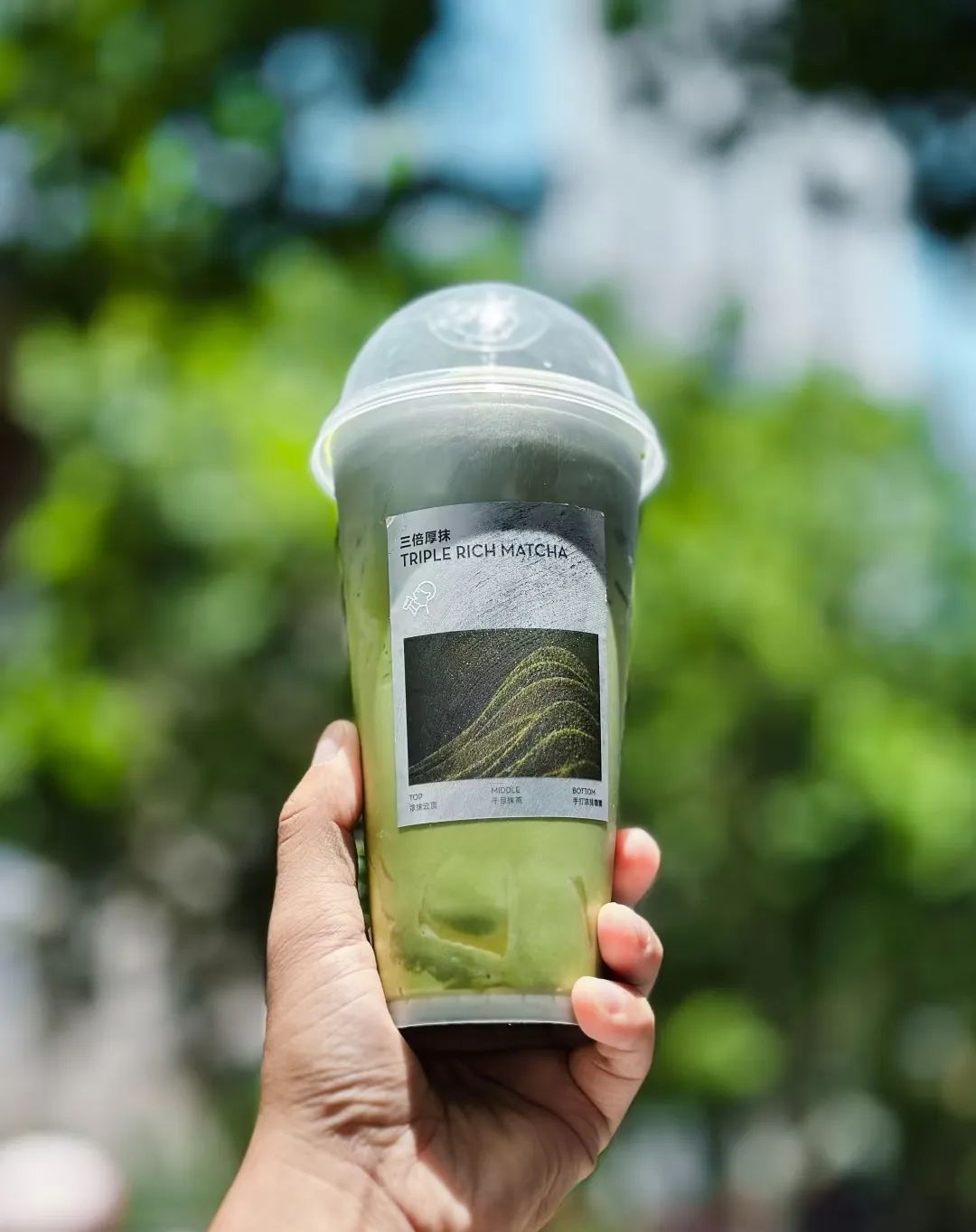
HeyteaTriple Supreme Matcha
Image source: Xiaohongshu @芣深
This wave of green, originating from celebrity influence, was not merely a simple replication of a "mature product" overseas but a localized decision made after in-depth research into the local market.
In fact, within the domestic market, a wave of popular tea bases emerges periodically. From the coconut, wild berry (油柑), wampi (黄皮), mulberry, and pineapple bases of previous years to this year's waxberry (杨梅) and lychee bases, the incorporation of these seasonal limited-edition flavors seems to provide new-style tea companies with an endless source of inspiration.
The same principle applies overseas. While expanding globally, several tea brands have also amplified the "limited edition" strategy.
In Malaysia, Mixue Ice Cream & Tea (蜜雪冰城) launched ice cream and tea drinks inspired by the local specialty spice, bak kut teh. In Vietnam, Mixue increased the overall sweetness and introduced fruit teas with flavors favored by locals, such as lemongrass and pineapple. Chagee (霸王茶姬) also delved into Southeast Asia, incorporating Filipino purple yam and Indonesian pandan leaves into its tea bases. Its "Durian Coconut Tieguanyin" launched in Indonesia once became a local hit. Nayuki's Tea (奈雪的茶), catering to Thai consumers' preference for rich, robust flavors, launched limited series like "Da Hong Pao Milk Tea" and "Lychee Rose Milk Tea" locally.
Recently, Tianlala launched "peach oolong milk tea" in Indonesia. Regarding the reason for launching this product, Tianlala told Xiaguang Club, "We observed that brands with similar price points to us, like momoyo and Mixue, had not yet introduced Chinese-style light milk tea, while Chagee belongs to the premium tea segment with higher prices. Locals want to drink it, but purchase frequency is limited by economic constraints. Tianlala captured the local preference for light milk tea, perceiving it as fashionable, trendy, and healthy. Therefore, building on the popularity of our 'Qingfeng Mobaixian Milk Tea' (清风茉白鲜奶茶), we launched peach oolong milk tea. This product uses peach oolong tea as the base, paired with a milk base, continuing the domestic concept of 'healthy light milk tea,' along with our brand philosophy of low price, high value, and high aesthetics, and is well-liked by locals."
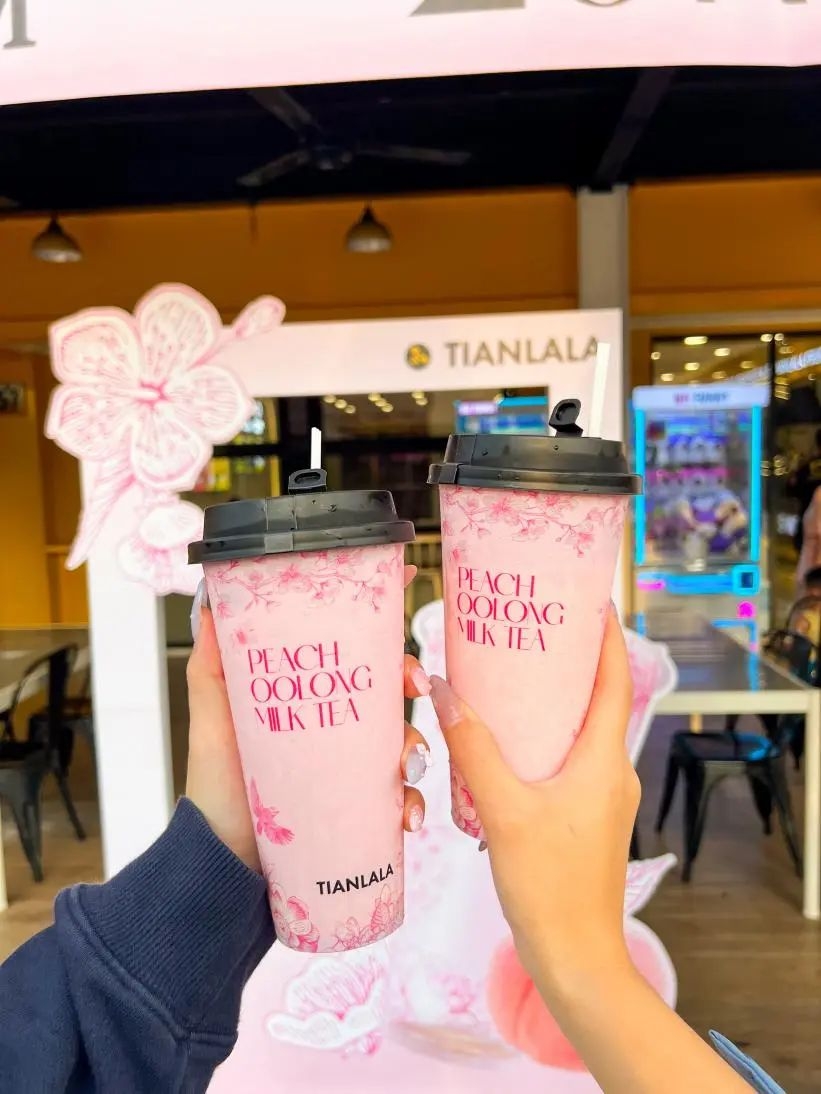
Image source: WeChat Official Account @Xiaguang Club
Decisions based on in-depth market research have also led to positive reception for Tianlala's new product upon launch. According to Tianlala Indonesia, peach oolong milk tea achieved nearly 400 cups sold in a single store in one day at its peak, firmly securing the top sales position.
The same applies to regions beyond Southeast Asia. The "Matcha Cloud Coconut Blue" mentioned at the beginning is a limited-edition product Heytea launched specifically for overseas markets—the unique visual effect of blue spirulina combined with green matcha has become the top choice for many users to share online. As of August 2025, related hashtags for Heytea's Matcha Cloud Coconut Blue on TikTok have surpassed 500 million views, sparking global discussion and a buying frenzy.
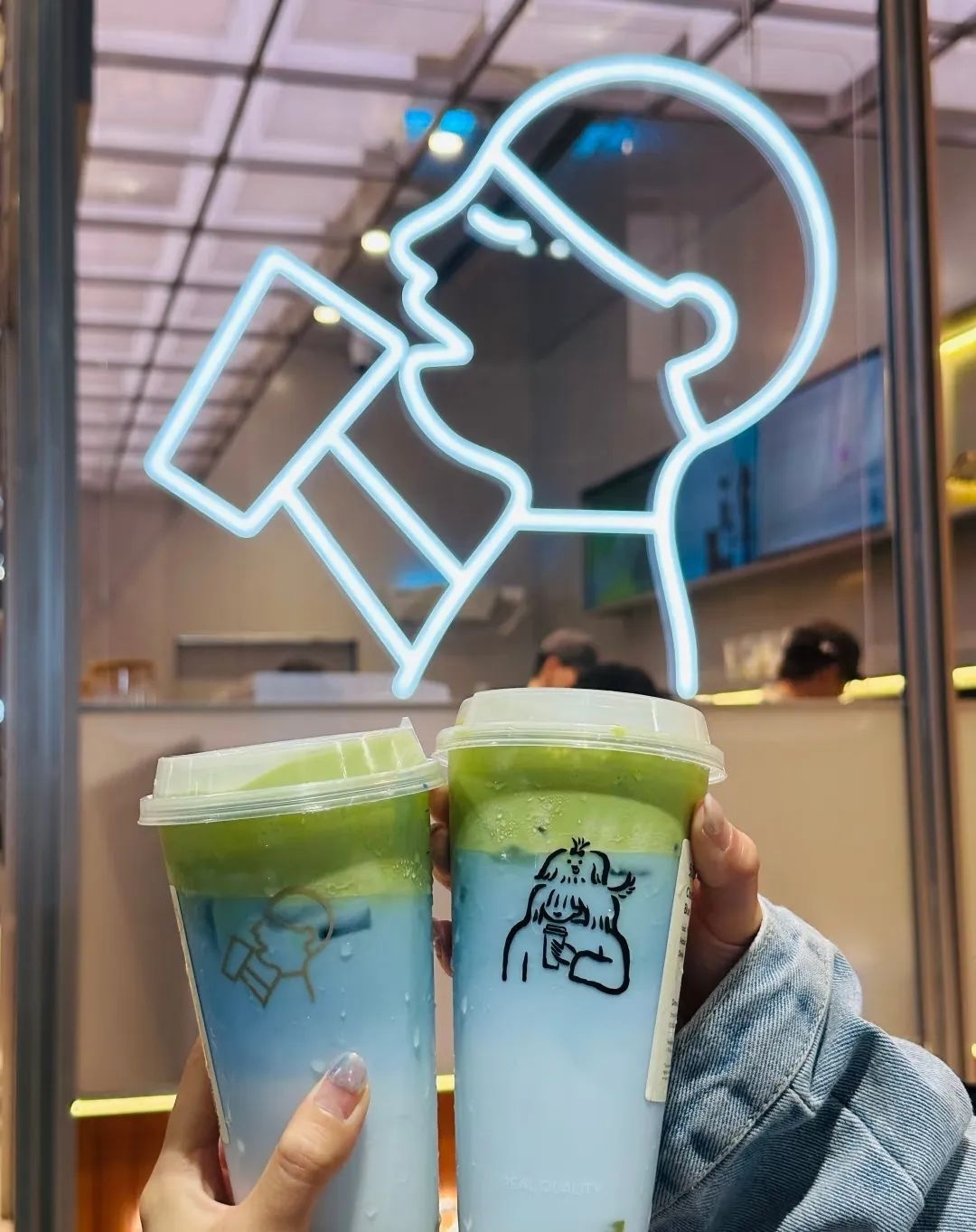
Image source: Xiaohongshu @阿yun超爱修狗!
A Heytea representative revealed that the success of this product stems from Heytea's focus on user needs and its continuous commitment to innovation driven by inspiration.
"Globally, blue beverages are favored for their dreamy visual appeal and refreshing taste. Beyond the product's visual appearance, Heytea innovatively combined spirulina, matcha, and coconut water, aligning with the preference for 'superfoods' in European and American markets, successfully launching Matcha Cloud Coconut Blue. These ingredients are already widely used in the health food cultures of Europe and America. Heytea skillfully integrated these elements into tea beverages, endowing Matcha Cloud Coconut Blue with a unique flavor experience that not only meets the aesthetic demands of global consumers but also precisely aligns with their desire for healthy drinks," the representative emphasized.
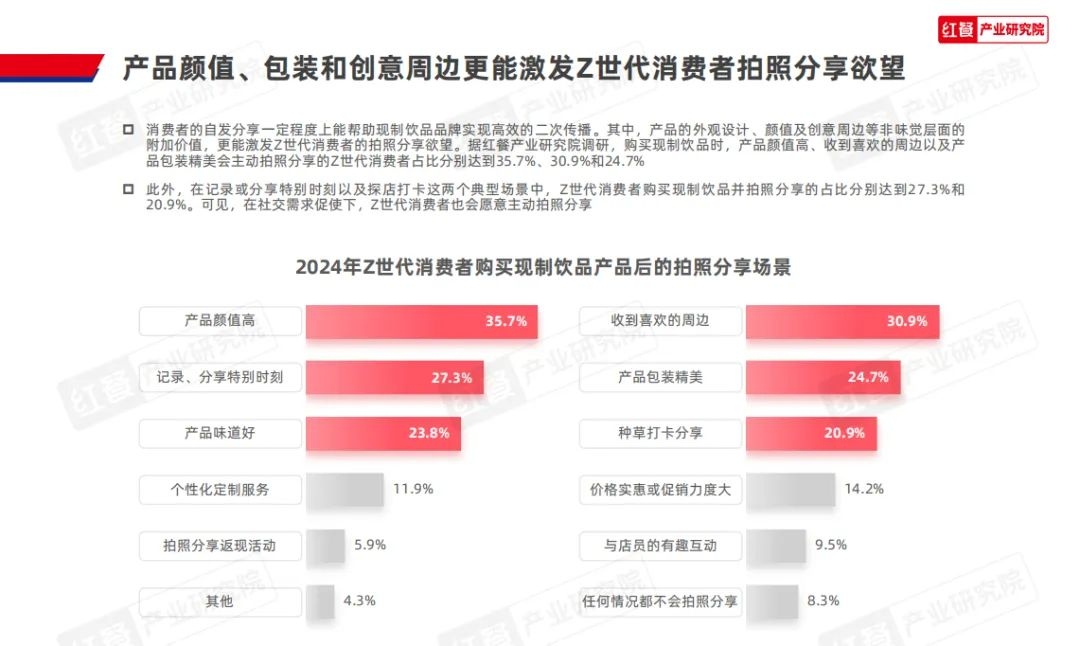
"Gen Z Consumption Insights Report for On-Demand Beverages 2024"
Image source: Hongcan Industry Research Institute
The "Gen Z Consumption Insights Report for On-Demand Beverages 2024" indicates that added value beyond taste—such as product appearance, aesthetics, and creative merchandise—can more effectively stimulate Gen Z consumers' desire to take photos and share.
According to research by the Hongcan Industry Research Institute, in the two typical scenarios of documenting or sharing special moments and exploring/browsing shops, the proportion of Gen Z consumers who purchase on-demand beverages and take photos to share reaches 27.3% and 20.9%, respectively. The institution also points out that consumers' spontaneous sharing can, to some extent, help on-demand beverage brands achieve efficient secondary exposure.
The product is the medium, the taste is the topic. When a beverage's ingredient combination and color scheme align with consumers' cognitive frameworks, it inherently carries the DNA for social transmission—consumers are no longer mere purchasers but become co-creators of content and nodes for dissemination.

Bringing the Chinese Supply Chain Overseas
Developing a new product that suits local tastes in an unfamiliar market poses a significant challenge to a tea brand's existing supply chain.
Wang Jie, co-founder of Ningji (柠季), once candidly stated: "The biggest challenge (in going overseas) is supply chain construction and efficiency. Different raw material access standards, transportation difficulties, varying consumer taste preferences, etc., all require adjustments."
Simultaneously, food safety laws and regulations vary across regions. For example, the European Union has 480 pesticide residue testing indicators for tea, far exceeding domestic standards; a new regulation effective in March 2025 further raises pesticide residue standards. Plastic packaging bans in Southeast Asia indirectly increase operational costs; Singapore's sugar content grading system forces recipe optimization. These compliance requirements pose a severe test for brands.
Adapting to different regional cultures is also an invisible barrier. European and American markets emphasize organic health, while Southeast Asian markets prefer rich, sweet flavors, with some countries also requiring halal certification; when conducting marketing activities for different holidays and traditional events, one must also be cautious.
Goodme (古茗) disclosed its product development process in its 2024 financial report, consisting of six steps: idea generation and screening, finding suitable suppliers and raw materials, formula development, internal and in-store testing, and post-release feedback collection.
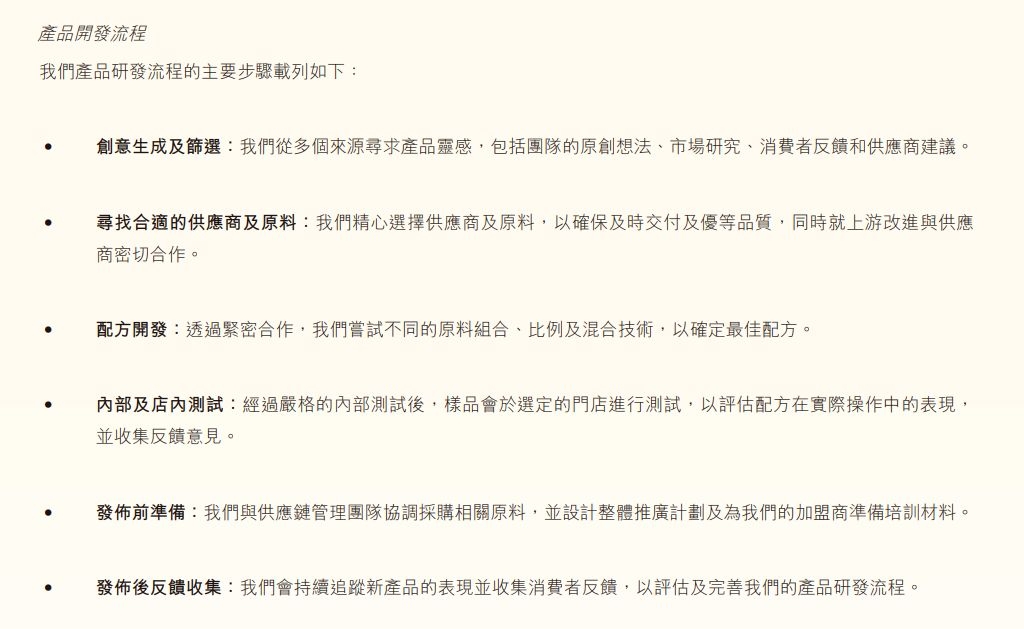
Image source: Goodme 2024 Financial Report
A product development staff member at a new-style tea brand revealed a development process slightly different from Goodme's but generally similar. He also stated, "The traditional R&D model is like a heavy elephant. Developing a new flavor requires 1-6 months, at least 20 sampling trials, potentially costing tens of millions in budget."
During this period, it is also necessary to complete formula adjustment, raw material procurement, taste testing, and compliance testing, including mandatory processes such as food safety certification and shelf-life testing. After the product prototype is completed, the second step is to enter the supply chain construction phase (3-6 months), determining sourcing locations, quantities, supply guarantees, stability and reliability, cold chain logistics support, including factory integration. The third step is the brand system phase (3-6 months), where visual identity/IP design, pricing strategy, channel negotiations, and compliance document (production license/trademark registration) approval need to be finalized. Finally, the market validation phase begins, with simultaneous online and offline launch and promotion. During the trial sales period, adjustments are made to the product line based on user feedback, determining whether to increase procurement and inventory or convert the limited edition into a permanent offering.
Nowadays, as the supply chain construction of various brands matures, the same process has been shortened by about half. Moreover, with the addition of more efficient digital tools (e.g., order data, market research data, social media trend analysis), the success rate of flavor improvements and new product development has also significantly increased.
Therefore, we can see from the financial reports of related companies that over the past few years, the Mixue Group has developed over 40 new products, while independently developing and producing premium zero-trans-fat milk base powder, fresh milk base, etc., meeting consumer health demands while saving costs. In 2024, Chabaidao, Nayuki's Tea, and Goodme launched 60, 70, and 100 new products respectively, essentially achieving year-round "weekly new releases," which also confirms the confidence that a mature supply chain gives enterprises in new product development.
This advantage of the Chinese supply chain also plays a significant role when launching products in overseas markets.
Heytea's Refreshing Guava Series, launched domestically in February this year, quickly gained popularity. Within less than two months, the product was simultaneously launched in multiple markets including the US, UK, Singapore, Australia, etc., also triggering a buying frenzy among local consumers.
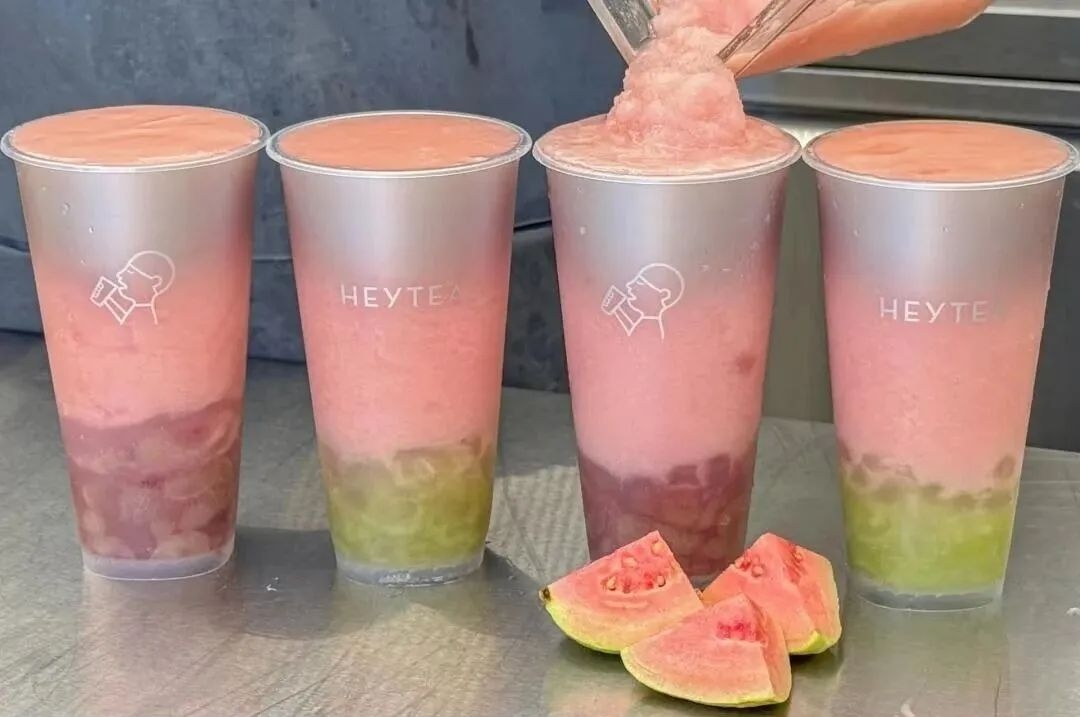
Heytea Refreshing Guava Series
Image source: Xiaohongshu @Hangzhou Fuyang Wanda Plaza
A Heytea representative stated that to allow consumers in different regions to taste products with a consistent flavor, Heytea has established multiple warehousing centers on the east and west coasts of the US, in the UK, Malaysia, and in Sydney and Melbourne, Australia, providing efficient warehousing and logistics services for local stores. Core product ingredients required by overseas stores are supplied uniformly by Heytea, ensuring consistent product quality across stores.
"In the future, the North American supply chain team will continue to advance the localized production and supply of key ingredients, further enhancing supply chain stability and capabilities for scaled expansion," the representative revealed.
Chabaidao Overseas CEO Wang Huan mentioned that whenever Chabaidao enters a new country, the R&D and operations teams arrive in the local market one month in advance to develop several products favored by local consumers. In product development, over 70% of the raw material formulas are independently developed by Chabaidao.
Taking Chabaidao's first European store in Barcelona, Spain, opened after this year's Chinese New Year as an example, in addition to domestic hit products, the store also made appropriate product adjustments and innovations based on the taste preferences and dietary habits of local Spanish consumers, launching a limited-edition beverage with local characteristics—Matcha Brown Sugar Pearl Milk Tea, which received widespread acclaim from local consumers.
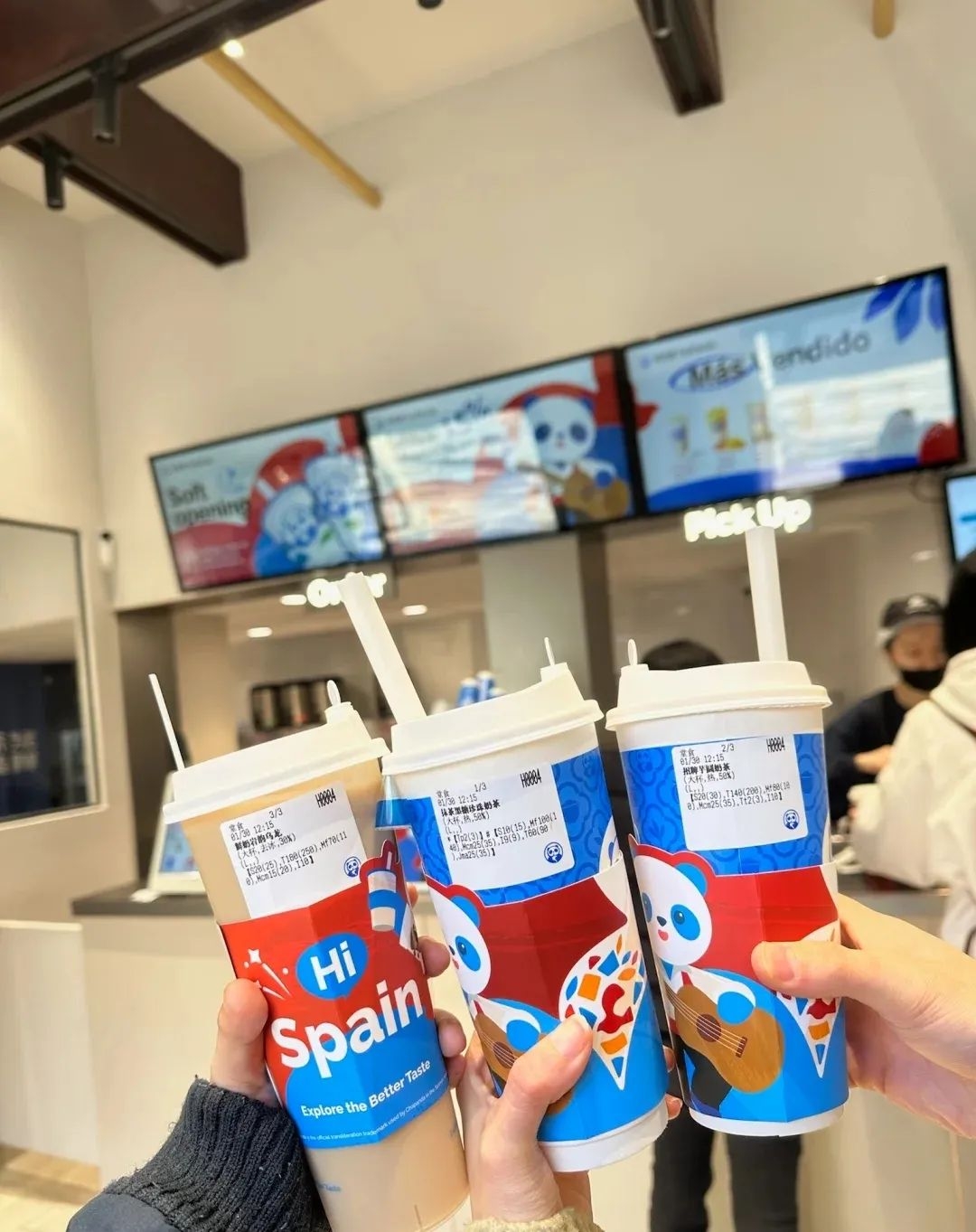
Image source: Xiaohongshu @一天睡25小时
The development of overseas products ultimately needs to be integrated with the local consumption level and dietary culture. For example, in response to the coffee-loving habit of Southeast Asians, Tianlala specifically developed a "coffee + fruit" series of beverages. "We conducted tests; the sales of the new coffee products in various stores have skyrocketed from initially ranking in the top 20 to now ranking in the top 6," Tianlala stated.
Beyond attracting consumers with new products, ensuring "thousands of stores, billions of cups, with consistent taste" is also a major challenge for new-style tea brands.
Chagee CTO Tang Haitao revealed that currently, Chagee has over 6,000 stores globally, and its signature item "Boyajuexian" (伯牙绝弦) sells approximately 100 million cups annually. For this product, the difficulty is no longer how to create a hit product, but how to ensure that all stores can produce this cup of tea with exactly the same quality.
"So how do we achieve this quality consistency across thousands of stores? On one hand, we standardized the equipment. In Chagee's latest 3.0 store, you can see an automated tea-making machine. After consumers place an order via the mini-program, the tea machine scans the QR code on the cup to identify the corresponding flavor, and then the tea machine begins production according to the consumer's taste and the standard formula. It can now produce a cup of tea in 8 seconds, and no matter which store you are in, the taste of this cup of tea is the same. On the other hand, we standardized operations, making much of the frontline management follow rules through Feishu and AI. The significance of this step for our frontline partners is that standards and answers are no longer out of reach; they are right by their side anytime, anywhere. So we often say that consistent hit product quality doesn't rely on skill, but on standards," said Tang Haitao.

"Cultural Counter-Export" Brings Hidden Dividends
Tea is not only China's "national drink" but also a beverage beloved by over half of the world's population. Among the world's three major non-alcoholic beverages, tea ranks first.
A research report released by Shenwan Hongyuan shows that based on terminal retail sales, the global on-demand beverage industry's market size grew from $598.9 billion in 2018 to $779.1 billion in 2023, with a compound annual growth rate (CAGR) of 5.4%. The CAGR from 2023 to 2028 is expected to reach 7.2%, with the market size reaching $1,103.9 billion in 2028.
Under high growth rates, the global on-demand beverage market shows clear regional differentiation. The Southeast Asian market leverages its vast ethnic Chinese foundation, young population characteristics, and typical tropical climate to create business opportunities for the on-demand tea beverage category, but it has already entered a "price war" red ocean. Japan and South Korea face new demands for health upgrades; green tea dominates consumption in Japan, while fruit tea/grain tea is gradually becoming a trend in South Korea. Tea consumption methods are diverse across European countries; the UK is the largest tea consumer with high per capita consumption, and the mid-to-high-end market is a blue ocean. In the US, bubble tea remains highly popular, with a fragmented market structure and a lack of a clear leading player, and consumers prefer differentiated products...
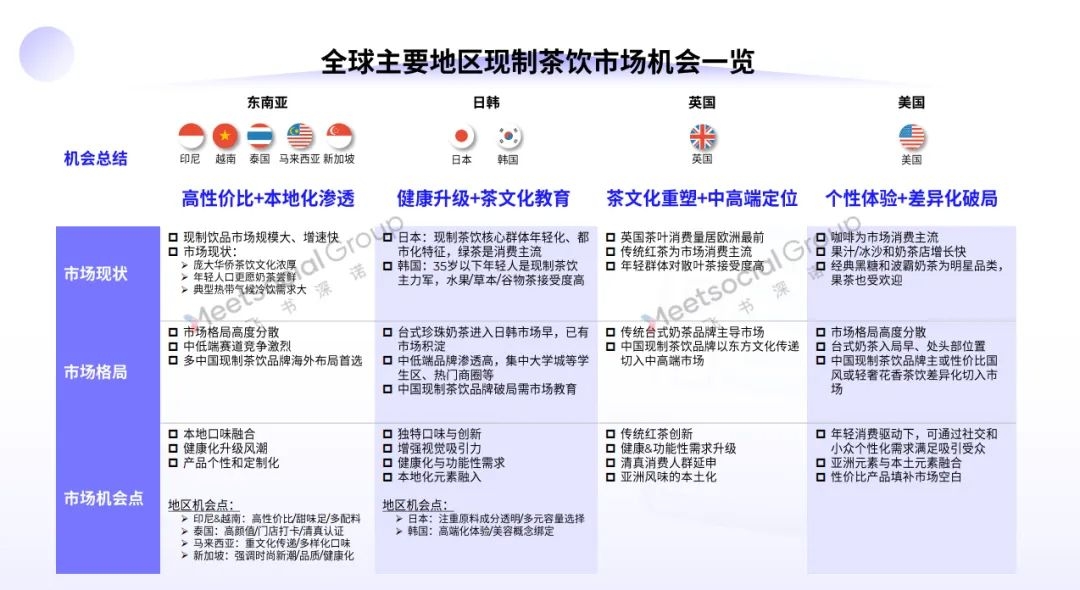
"2025 China New Tea Drinks Going Global Panoramic Report: Chinese Taste, Global Trend"
Image Source: Feishu Shennuo
Develop targeted strategies based on the differences in various markets, integrate Chinese tea culture with local cultures, enabling new Chinese tea drink brands to quickly stand out in competition with local giants.
Heytea once launched the "California Sunset" limited edition at its Beverly Hills store. This beverage was inspired by California's world-renowned sunset scenery, cleverly incorporating cultural characteristics and natural landscape elements of the state. On the store's opening day, approximately 2000 cups of this product were sold.
To successfully achieve localization in the Korean market, Cha Bai Dao (Chabaidao) also made many localization efforts. Wang Huan recalled that when naming products, the team specifically named "Jasmine Milk Tea" as "Mori Latte", which sounds closer to Chinese pronunciation, rather than using the Korean reading similar to the English "Jasmine". Now, "Mori Latte" has become a representative category in South Korea.
Beyond products, store decoration has also become an important part of promoting Chinese culture. Taking Heytea as an example, its stores in many global locations are highly designed: the London New Oxford St store, near the British Museum, integrates the imagery of "ink and tea" to create an ink painting space for "strolling gardens, tasting tea, and appreciating objects"; the Seoul Myeongdong store creates a Zen-like space reminiscent of "high mountains and flowing water" through the three dimensions of "water's form, color, and sound"; while the design inspiration for the New York Times Square TEA LAB store comes from the Tang Dynasty poet Wei Yingwu's poem "Delight in Tea Growing in the Garden", creating a "city oasis" themed space.
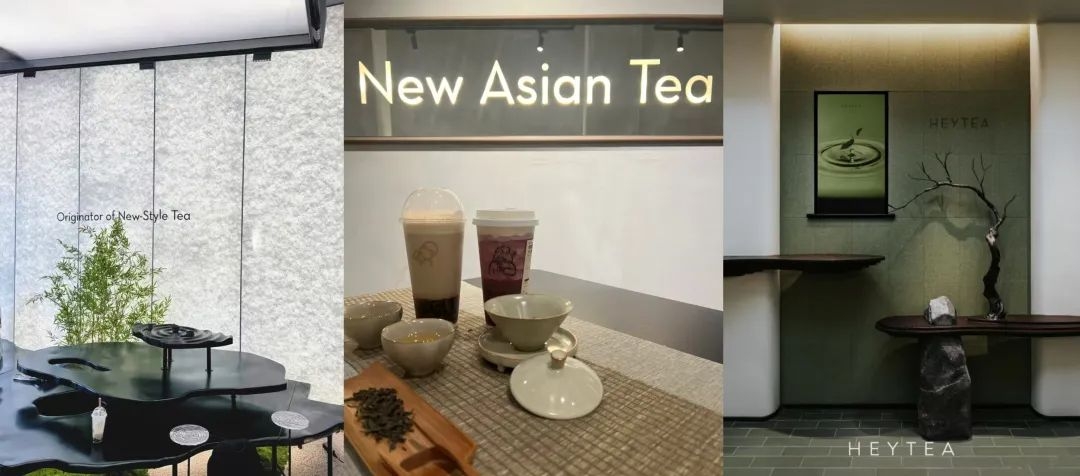
Image Source: Xiaohongshu @椰丝Miranda, @圈圈元元圈圈, @喜茶
Centered around this design philosophy, Heytea creates a deep experience of "Chinese tea culture" within traditional European/American-style shopping malls and pedestrian streets.
On the marketing front, various brands have consistently chosen representative spokespersons or partners to build cross-cultural dialogue capabilities with overseas consumers.
For example, when entering the Malaysian market, Chagee (Bawang Chaji) chose the renowned athlete Lee Chong Wei as its spokesperson; in 2025, after Stefanie Sun's "After Sunset" concert, Chagee officially announced her as its Asia-Pacific spokesperson. Over the past year, Heytea has successively collaborated with globally renowned artists and trendy brands such as alexanderwang, Sandy Liang, "Tears of Themis", and Yayoi Kusama, generating topics across platforms like TikTok, Instagram, and Xiaohongshu.
Mixue Bingcheng, on the other hand, adopts the strategy of "IP preceding physical stores," with its Snow King animation currently being hotly aired overseas. Financial reports show that the Snow King animation has been simultaneously launched on four major overseas channels, covering over 30 African countries. The average viewership rating for the first broadcast reached 1.14%, with a peak rating of 3.08%. Meanwhile, the animation was also broadcast at the Cannes International Film Festival in France, showcasing Chinese brand power at the world's top-tier film festival.
Will, a seasoned domestic tea beverage expert, told Xiaguang Society that consumers in Southeast Asia rarely ever see snow, making them particularly fond of the "Snow King." "In China, few people buy Mixue Bingcheng's merchandise, but Thais really love the dolls, keychains, stationery, and other products derived from the Snow King IP." During this year's Thai Songkran Festival, the Snow King, clad in a red cape, sat on a water truck for a parade through Bangkok. "Southeast Asians have such high recognition of Mixue Bingcheng that even people from Cambodia, Laos, and Myanmar can accurately pronounce the Chinese characters 'Mixue'."
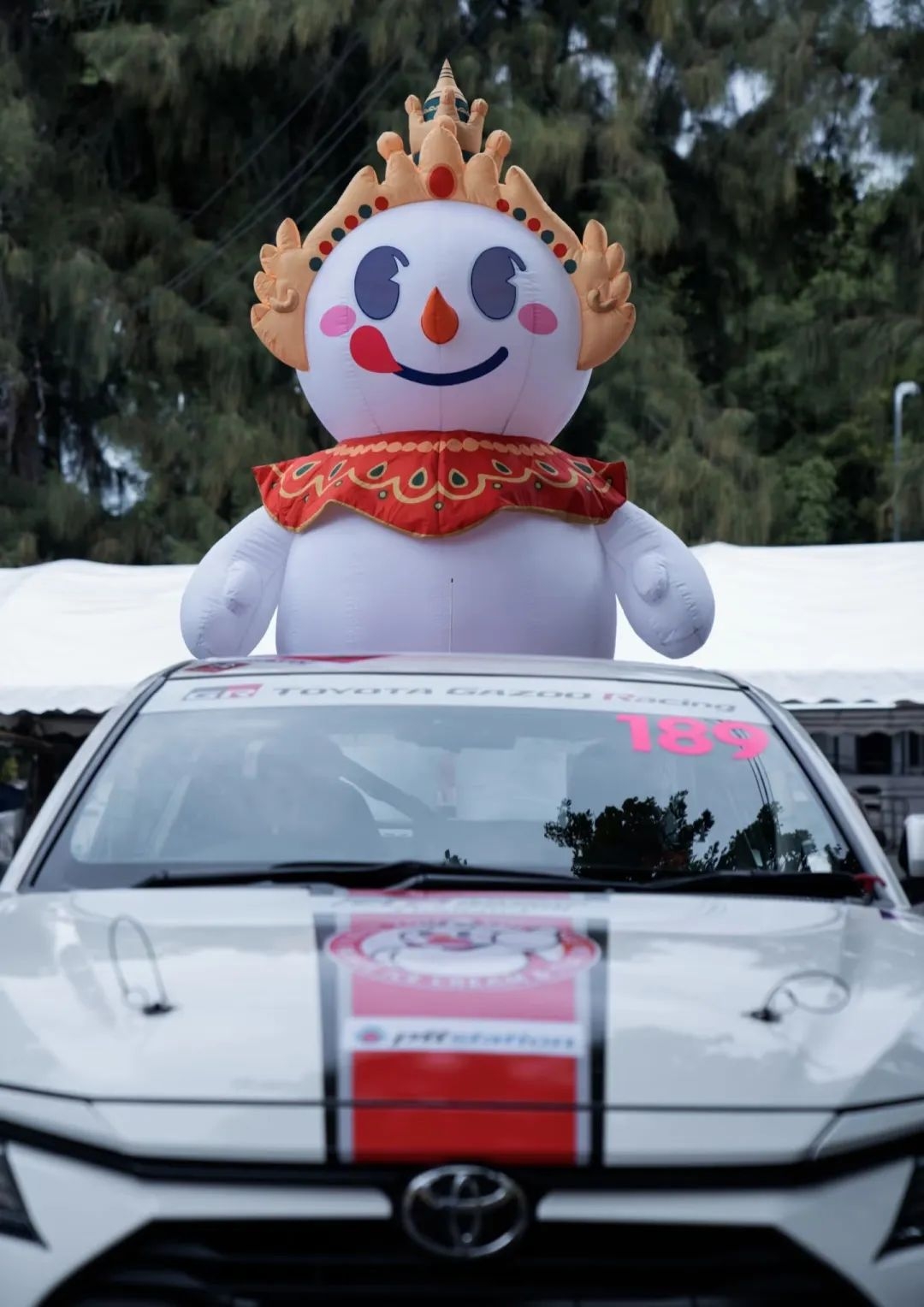
Image Source: Xiaohongshu @蜜雪冰城泰国
These cases vividly demonstrate the possibility of cultural integration. New Chinese-style tea beverage brands do not simply replicate the original Chinese flavors; instead, they combine the concepts of Chinese tea drinks with local ingredients, tastes, and dietary habits, thereby establishing a "resonant" cultural connection. This method of cultural export does not present a closed tradition but, through subtle adaptations in taste, fosters an open and shareable cultural experience.
All this indicates that the globalization of bubble tea is no longer just about "selling products overseas."
In the past, cultural dissemination might have remained at the level of brand narratives and product experiences; today, truly profound cultural export emphasizes the "power of integration," subtle and imperceptible.

Summary
Young scholar Zhang Xuan mentioned an observation in her new book "Bubble Tea Goes Global: The Global Expansion of New Chinese-Style Tea Beverage Brands." On the streets of the United States, foreigners wearing t-shirts with brown sugar boba designs are everywhere. During coffee breaks at American companies, pearl tea memes have also started appearing in office group chats. Bubble tea, replacing coffee and alcohol, is being chosen by many young people as their leisure beverage.
The global expansion of new tea drinks is not about snatching a share of coffee from overseas consumers; it is about fundamentally reshaping consumer habits.
This is not merely a battle over tea beverages; it is a cognitive revolution. It also heralds a new phase in the globalization competition for China's new tea drink brands. Beyond traditional dimensions like efficiency and scale, cultural perception, aesthetic creativity, and emotional resonance are increasingly becoming the core competitive advantages for multinational brands to win hearts.
This expedition, which began commercially, is evolving into a deep dialogue between different civilizations.
Reference Sources:
[1] "Intensified Domestic Competition, Overseas Markets Become 'Second Growth Curve' – Catering Industry Research Series Report II: Tea Drinks Going Global," Ping An Securities
[2] "Tea Drinks 'Going Global': Brand, Product, and Supply Chain as Cornerstones – Interview with Wang Huan, Overseas CEO of Chabaidao," Xinhua Finance
[3] "2024 Gen Z On-the-go Beverage Consumption Insight Report," Hongcanwang Industry Research Institute
[4] "2025 China Tea Drinks Going Global Panoramic Report: Chinese Taste, Global Trend," Feishu Shennuo